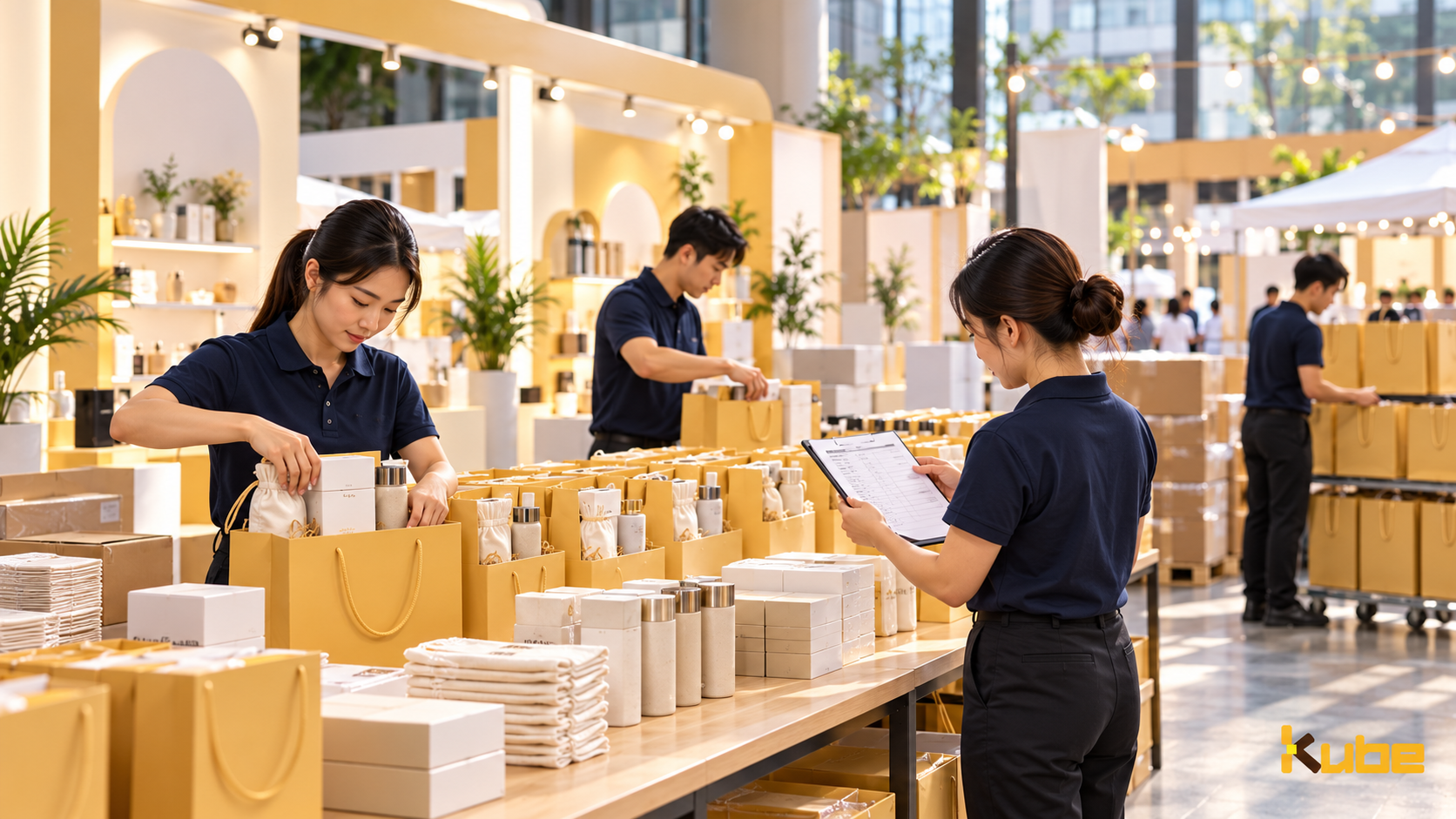

What running your own Hong Kong warehouse involves
Operating locally requires someone to manage premises, equipment, receiving, staffing and daily dispatch, as well as inventory checks and exceptions. If the overseas headquarters has no local owner for these tasks, consider who will manage the operation over time, not only the rental cost.
Running the operation in-house lets the brand set its own processes and may suit businesses with stable demand, extensive special handling and sufficient management resources. However, the premises and team may still need to be maintained when demand drops, and expansion takes preparation.
A local partner still needs brand decisions
A local Hong Kong fulfilment partner can handle storage, inventory and order execution according to an agreed scope. The brand still needs to maintain product information, replenishment planning, channel strategy and customer service decisions, and someone must confirm exceptions. Outsourcing changes who performs the physical work; it does not hand over the entire Hong Kong business.
When reviewing outsourced warehousing in Hong Kong, ask about the service scope, information handover, minimum requirements and exit arrangements. If headquarters must approve certain tasks, consider the time-zone impact and set a clear contact method.
Market testing and ongoing growth involve different considerations
An overseas ecommerce brand testing the Hong Kong market may focus on how much fixed resource it must commit while demand is uncertain, and how easily the arrangement can change as products or order volumes shift. Whether outsourcing is a better fit depends on the quote, minimum requirements and service fit; there is no universal answer.
As the business grows, compare the actual order mix, special processes and internal management capacity again. Higher demand does not automatically mean that the brand should operate its own warehouse. Equally, outsourcing does not mean every new task must go to the existing partner.
Include transferability in the comparison
Whichever model you choose, check whether inventory data can be reconciled, how goods can be transferred and whether process knowledge sits with only one employee. Documenting these arrangements can reduce disruption to orders if the scale or service partner changes later.
Assess premises, staffing, management time, special handling and transition costs in one comparison, then consider both normal and higher-demand scenarios.
How Kube can help
Kube supports warehousing in Hong Kong, B2C and B2B order processing, Pick and Pack, and delivery arrangements for overseas brands. Share your current market stage and expected volume to discuss whether outsourcing fits the work you need to allocate.
Market testing and established operations have different needs
When testing the Hong Kong market, demand, SKUs and channels may still change. An in-house warehouse requires premises, staff, equipment and local management, with fixed commitments even if orders decline. A 3PL charges for the agreed services and actual work, but you should also understand minimum charges, operating limits and exit terms.
As operations mature, demand becomes more stable or special handling increases, compare in-house and outsourced models again. More orders do not necessarily mean you need your own warehouse, and outsourcing does not mean every task has to go to one provider. Decide based on management capacity, service requirements, cost and risk, not order volume alone.
Make transferability part of the decision
Under either model, inventory, procedures and records should not be known by only one employee. Make sure SKUs, stock, order status, packing instructions and supplier arrangements can be checked and handed over. Market strategy may change; clear operating records help avoid stopping all orders when the scale or partner changes.