
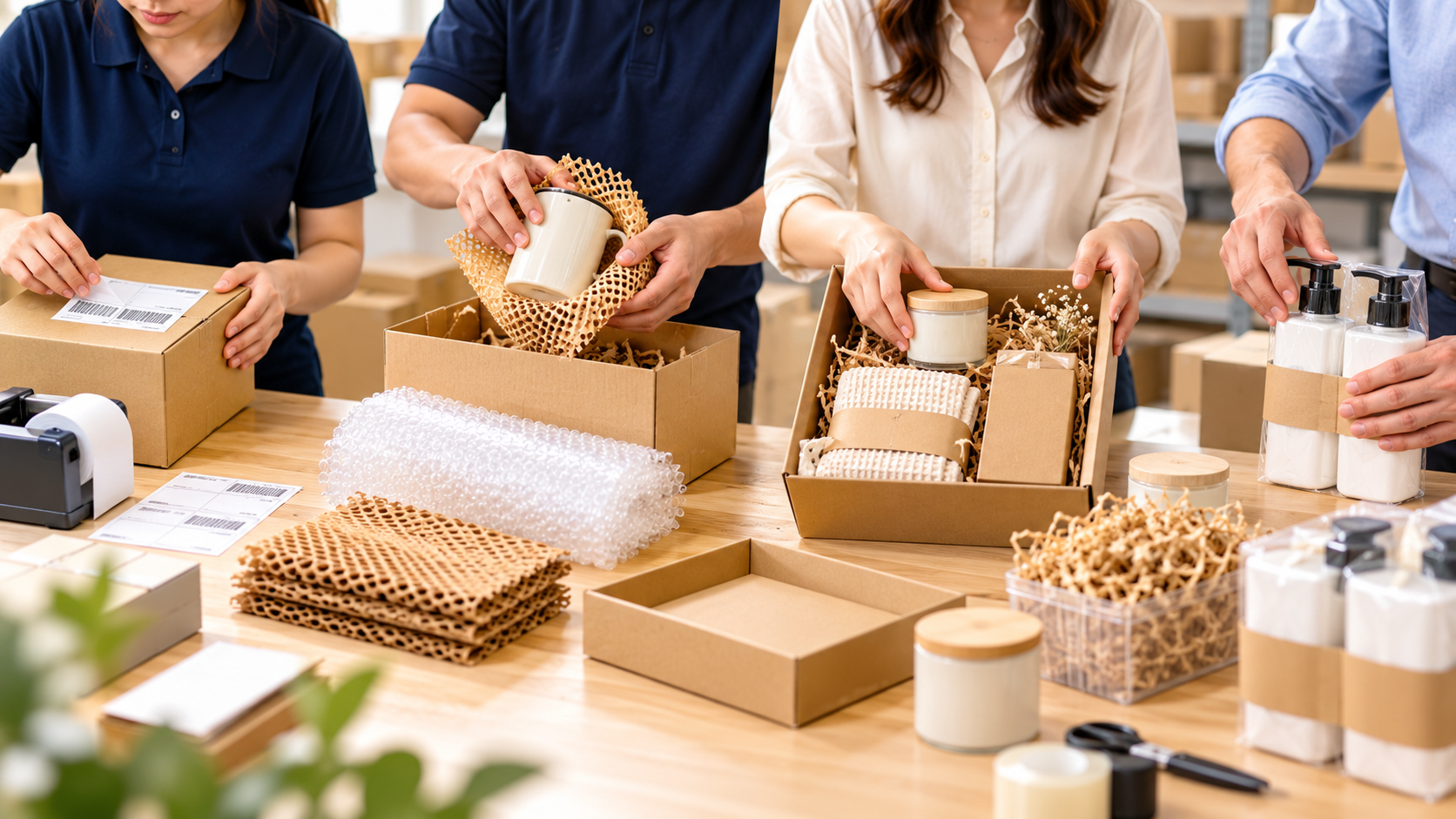
Labelling and relabelling
Labelling can support product identification, sales channel requirements, batch information or brand presentation. Relabelling may involve removing, covering or updating an existing label. Before work begins, confirm the label size, position, orientation, applicable SKUs and quantities, and what should happen to old labels. An approved sample is helpful.
The warehouse follows the brand’s instructions, but the brand remains responsible for confirming label content, product compliance and sales requirements. If there are several label versions, specify the batches for each version so old and new labels are not mixed.
How are kitting and bundling different?
Kitting usually means combining specified products into a new set, which may receive its own SKU and finished-goods inventory. Bundling can mean grouping products for a sale or promotion without necessarily creating a permanent pre-assembled set. Terminology varies; what matters is whether products are assembled in advance or combined after an order arrives.
Pre-assembly can speed up dispatch during a busy period, but it converts individual items into set inventory. Assembling after an order keeps more flexibility in individual stock but adds steps to each order. Choose according to the campaign timing, expected quantity and whether the individual items will continue to be sold separately.
Repacking and preparing product sets
Repacking can include changing an outer box, adding an insert, moving goods into specified packaging or replacing outer packaging that is unsuitable for sale. Set preparation may involve adding a gift, card, leaflet or other product. For each step, confirm who supplies the materials, the acceptance standard, how wastage is handled and what completion record is needed.
How value-added work connects to inventory
Before work starts, the warehouse allocates the required quantity from available stock. When the work is complete, inventory is updated as agreed: it may become a new SKU, return to the original stock or move directly into B2C or B2B fulfilment. If the physical work is completed but inventory status is not updated, an online store may continue selling individual units that have already been allocated.
When asking a 3PL, provide product photos, SKUs, quantities, each processing step, materials, approved samples, deadlines and what happens to the finished goods. Kube can handle labelling, relabelling, kitting, bundling, repacking and product set preparation within its Hong Kong warehouse operations. The actual arrangement and charge depend on the work involved.
Set an acceptance standard before work begins
Make a small sample batch first so the brand can approve label position, set contents, appearance and sealing method. During production, record completed, pending and rejected quantities by batch. If instructions change, state which batch the new version applies to so completed products are not unnecessarily reworked.
Do not assess the job on speed alone. Check sample accuracy, material wastage, inventory conversion records and delivery timing together. If products arrive damaged or quantities do not match, record those issues separately before deciding whether to continue processing, pause or return them. Do not mix an upstream issue into the finished work record.