
The first stage is inbound receiving
Inbound receiving requires expected delivery information, SKUs and a quantity list. The warehouse receives and checks the goods as agreed. If there is a shortage, a variant is mixed up or an outer carton is damaged, the issue should be recorded and the next step confirmed. The purpose is to establish a reliable opening inventory record, not simply to move goods into a warehouse.
When arranging ecommerce warehousing in Hong Kong, consider how products will be stored and accessed. Each SKU should be identifiable. Stock that is unverified or unsuitable for sale should be separated from available inventory. Storage should fit both the product and the later dispatch tasks.
Inventory information determines whether an order can be fulfilled
Storage and inventory records must work together. Receiving goods, allocating them to orders and dispatching them can all change stock status. Confirm how records are updated so that customer-service staff do not see “in stock” when another order has already reserved the items.
At the order-processing stage, the warehouse needs complete instructions. If information is incorrect, stock is short or packing requirements are unconfirmed, mark the order as pending and ask the responsible person to decide. Tracking exceptions separately from routine work makes it easier to understand what is causing a backlog.
Pick and pack is followed by carrier handover
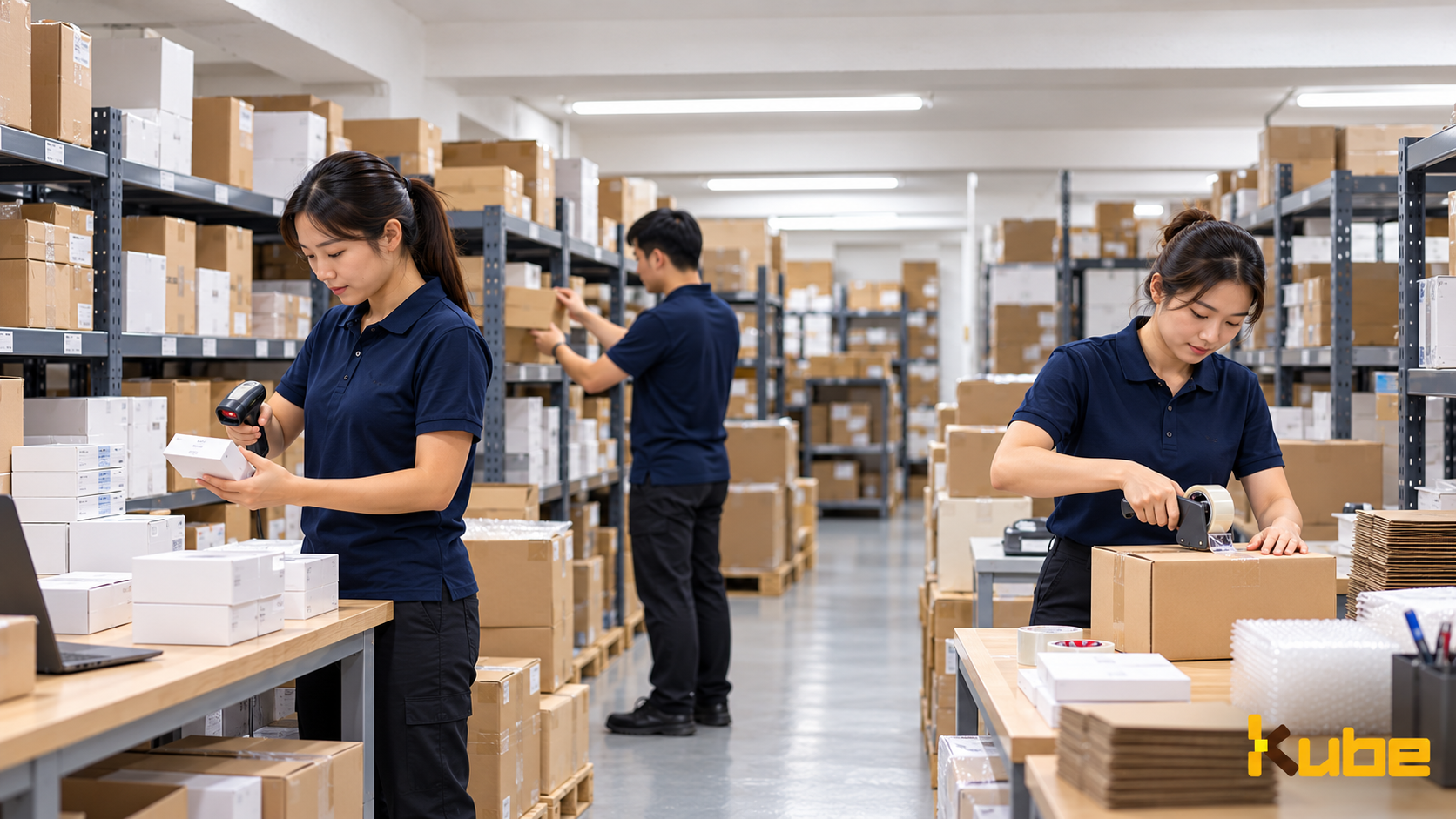
During ecommerce pick and pack, the team checks product variants and quantities, then packs the order to protect the goods and meet the brand's requirements. Next comes carrier handover, with dispatch information retained for follow-up. When comparing order fulfilment providers in Hong Kong, ask how they distinguish “packed” from “handed to the carrier”.
Delivery is the next stage. If there is an address issue or delivery cannot be completed, the brand and provider need a clear way to notify each other and follow up. Ask not only how routine orders are handled, but also who takes responsibility for exceptions.
Returned goods are not automatically saleable stock
If your business handles returns, confirm whether the warehouse can receive them, what inspection covers and what fees may apply. Whether returned goods can be resold requires a decision by the brand and an appropriate record. Only after confirmation should the available inventory be adjusted.
How Kube can help
Kube supports inbound receiving, storage, inventory management, order processing, pick and pack, and dispatch arrangements. Discuss the information and responsibilities at each stage to build a process that suits your brand.
Responsibilities of the brand and the 3PL
The 3PL carries out the physical tasks agreed by both parties, including receiving, storage, inventory records, picking, packing and dispatch preparation. The brand remains responsible for product information, sales policies, customer service, replenishment decisions and final instructions for stockouts, cancellations and special orders. Clear written responsibilities reduce guesswork in daily operations.
Before starting, provide an SKU list, product dimensions and weights, expected stock, normal and peak order volumes, items per order, packing requirements, sales channels and common exceptions. The warehouse can then plan receiving, storage locations, order handover, packing and carrier handover around that information.
Use order statuses to manage exceptions
Routine orders can follow the established workflow. Orders with missing information, insufficient inventory, address questions or conflicting packing instructions should be marked as pending confirmation so they do not disrupt the rest of the work. Appointing one person with authority to make decisions is usually more effective than sending the same question to several departments.
When evaluating a service, distinguish “packing complete”, “handed to the carrier” and “delivered to the customer”. These are different stages with different responsibilities and follow-up information.